
Berlin-Charlottenburg · Part of Ultimate
Epigenetic age testing, interpreted honestly.
Epigenetic clocks are scientifically fascinating and clinically not yet mature. We measure them from blood, state openly which model we use, and interpret the value alongside more than 230 biomarkers rather than as a number on its own.
From blood
not from saliva
Model disclosed
clock and generation named
Part of Ultimate
from €16,900, 230+ biomarkers
Overview
Epigenetic age testing at YEARS at a glance
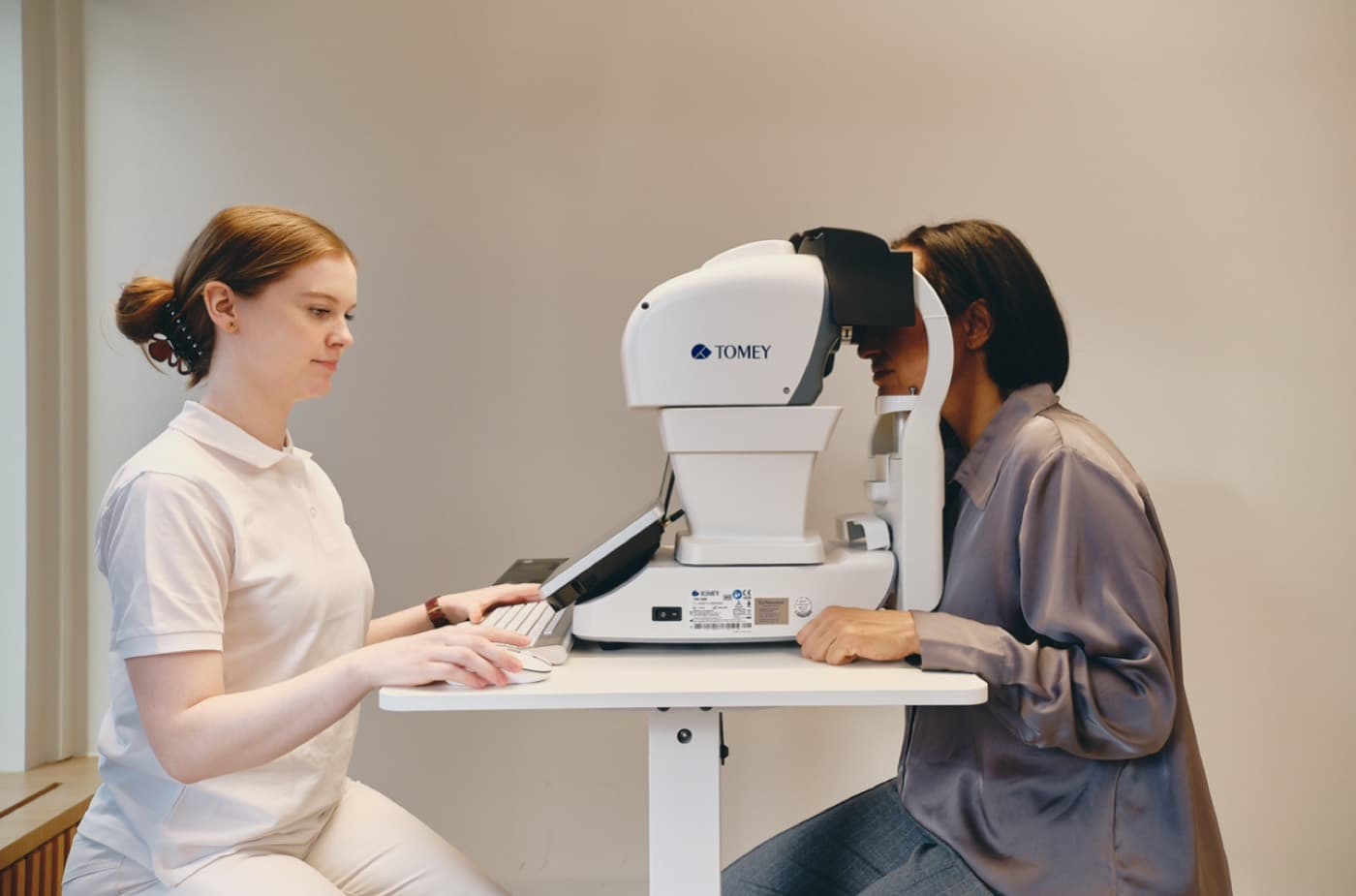
Epigenetic clocks estimate a biological age from DNA methylation, the chemical marks on DNA that shift with age and lifestyle. At YEARS this analysis is performed from a blood sample within the Ultimate program in Berlin-Charlottenburg and interpreted by a physician alongside more than 230 biomarkers, whole-body MRI, liquid biopsy, microbiome analysis and functional diagnostics. Part of that interpretation is stating what the measurement is not: it is not a validated clinical diagnostic. No medical guideline currently recommends epigenetic clocks as a basis for individual treatment decisions, and the test-retest reliability of early models was weak. We therefore use epigenetics as a supplementary trend parameter across years, not as a single value from which a decision could be derived. If your budget is limited, we recommend the established risk diagnostics first.
Key facts
- Sample
- Blood, drawn during your diagnostic day
- Method
- DNA methylation analysis, model named in your report
- Status
- Research-adjacent parameter, not a clinical diagnostic
- Included in
- YEARS Ultimate
- Useful as
- A trend across years, not as a single value
- Location
- Joachimsthaler Straße 34, Berlin-Charlottenburg
The models
Not every clock measures the same thing
Contradictory results between providers are usually explained by different models estimating different quantities.
| Model | Generation | Estimates | What it tells you |
|---|---|---|---|
| Horvath clock | First | Chronological age | Mainly shows how well your methylation reflects your date of birth |
| PhenoAge | Second | Clinically weighted age | Trained on lab values and mortality, more health relevance |
| GrimAge | Second | Mortality-associated age | Strongest association with mortality at cohort level |
| DunedinPACE | Third | Pace of ageing | Not an age but a rate. The more useful quantity for tracking change |
Which model was used belongs in any serious report. We disclose it and do not interpret across model boundaries, because a PhenoAge value and a Horvath value are not comparable.
Limits
What we do not claim about this measurement
The biological age market routinely promises more than the evidence supports. Here is where we stand.
No clinical validation for individual decisions
The association between accelerated epigenetic ageing and later disease is well established at population level. The prognostic value for you personally is not, and no guideline recommends the clocks as a basis for decisions.
Measurement precision was long a problem
First-generation clocks could deviate by several years across two measurements of the same sample. Principal-component-based variants improved this substantially, but the caveat belongs in the interpretation.
A lower number is not years gained
Lifestyle factors demonstrably correlate with epigenetic age. That an improved number translates into additional years of life has not been shown. The measurement is a surrogate, not an endpoint.
Established markers are better evidenced
For your disease risk, lipid profile, blood pressure, HbA1c, Lp(a) and imaging say far more, at a fraction of the cost. On a limited budget the order is clear: the established work first.
This is not an exception: YEARS classifies every procedure by evidence quality, and epigenetic clocks sit at tier 3, research-adjacent. Evidence and scientific standards

Berlin · Near Kurfürstendamm
A surrogate marker is not an endpoint. Blurring that sells hope.
How it works
The analysis, step by step
Embedded in your Ultimate diagnostic day, not booked as a separate appointment.
 01
01Blood draw
The sample for methylation analysis is taken together with the rest of your labs on your diagnostic day. No extra appointment, no separate saliva kit.
 02
02Methylation analysis
DNA methylation is determined at our partner lab and evaluated through the selected clock model. Which model was used is stated in your report.
 03
03Physician interpretation
Your value is discussed alongside the other 230+ biomarkers, your imaging and functional diagnostics, including the question of what it does not tell you.
Where this fits
Home kit or clinical measurement?
Both have their place. The question is what you intend to do with the result.
| Direct-to-consumer test | YEARS Ultimate | |
|---|---|---|
| Price | Around €200 to €400 | From €16,900 for the full program |
| Sample | Usually saliva | Blood |
| Model disclosed | Frequently not | Yes, named in the report |
| Accompanying diagnostics | None | 230+ biomarkers, MRI, liquid biopsy, microbiome |
| Physician interpretation | Usually none | Specialist physician, all findings together |
| Follow-up | Self-organised | Three check-ins across the year, health manager |
| What you get | A number in a PDF | A question that gets followed up |
If you are curious and simply want to see the value, take a direct-to-consumer test. It is the cheaper option and entirely sufficient for that purpose, and we would rather tell you beforehand. Ultimate makes sense when you want maximum diagnostic depth and epigenetics is one layer of it, not the reason for booking.
Free
Want an estimate without a lab first?
Our free calculator estimates your biological age from lifestyle and health inputs. It is not a methylation measurement and replaces no diagnostics, but it gives you a first sense of which factors actually carry weight in your case.
Estimate your biological ageFAQ
Frequently asked questions about epigenetic age testing
Epigenetic clocks estimate your biological age from DNA methylation, the chemical marks on your DNA that shift with age and with lifestyle factors. The algorithm compares your methylation pattern across hundreds to hundreds of thousands of sites against reference data and derives an age value from it. Well-known models include the Horvath clock, PhenoAge, GrimAge and DunedinPACE, the last of which estimates a pace of ageing rather than an age. An important caveat: these are statistical models trained on cohort data. They say something quite reliable about groups and considerably less reliable about an individual. We therefore treat them as a supplementary research parameter, not a diagnosis.
As a clinical diagnostic, no, and we say so plainly. No medical guideline currently recommends epigenetic clocks as a basis for individual treatment decisions. The association between accelerated epigenetic ageing and later disease is well established at population level; the prognostic value for a single person is not. There is also a practical problem: test-retest reliability of first-generation clocks was weak, with the same sample deviating by several years across two measurements. Newer principal-component-based variants have improved this substantially. For us that means: interesting as a trend across years, unusable as a single value on which to base a decision.
Direct-to-consumer tests typically cost 200 to 400 euros, usually work from a saliva sample and hand you a number in a PDF. That is not technically wrong, but it omits the part that makes the number usable. At YEARS, epigenetics is determined from a blood sample within the Ultimate program and interpreted by a physician alongside more than 230 biomarkers, whole-body MRI, liquid biopsy, microbiome analysis and functional diagnostics. An accelerated epigenetic age then becomes a question we can follow up, rather than a number you have to interpret yourself. If the number alone is what you want, a DTC test is the cheaper choice.
The models do not measure the same thing, which explains many contradictory results. First-generation clocks such as the Horvath clock were trained to predict chronological age, so they mainly tell you how well your methylation reflects your date of birth. Second-generation clocks such as PhenoAge and GrimAge were trained on clinical markers and mortality, which gives them more health relevance. DunedinPACE estimates not an age but your rate of ageing, which is the more useful quantity for tracking change. Which clock was used therefore belongs in any serious results discussion. We disclose it and do not interpret across model boundaries.
Treat this question carefully, because it is often posed wrongly. What is established is that lifestyle factors correlate with epigenetic age: smoking, alcohol, insufficient sleep, obesity and low physical activity all track with accelerated epigenetic ageing. Some smaller intervention studies show shifts in the measured value after lifestyle change. What does not follow is that a lowered number equals years of life gained. The measurement is a surrogate, not an endpoint. Anyone selling a compound that turns back the epigenetic clock is selling a claim for which there is no robust efficacy data on hard endpoints.
It is useful if you are undergoing comprehensive diagnostics anyway and want to track epigenetics as an additional layer across several years, or if you are scientifically interested and understand the difference between a research parameter and a diagnosis. It is less useful if you expect a dependable statement about your personal disease risk, because lipid profile, blood pressure, HbA1c, Lp(a) and imaging are far better evidenced for that and usually much cheaper. If your budget is limited, we explicitly recommend doing the established diagnostics first. Epigenetics is an addition, not a replacement.
We do not sell it as a standalone service. Epigenetic analysis is part of YEARS Ultimate from 16,900 euros, the most comprehensive program, with more than 230 biomarkers, whole-body MRI, liquid biopsy, microbiome analysis, neurological diagnostics and a dedicated health manager across the year. That is a deliberate decision: an epigenetic number without the diagnostic context beside it is not, in our view, a service worth selling. If an epigenetic age value is genuinely all you want, a direct-to-consumer test at 200 to 400 euros is the right route, and we would rather tell you that beforehand than afterwards.

Your next step
Right in Berlin. All in one day.
Schedule your free initial consultation — we advise you personally.
Location