
Provider comparison, Germany
Whole-body MRI providers compared. And eight questions that decide.
Radiology centre, US provider, private clinic or longevity clinic: all four perform a whole-body MRI, and they differ less in the image than in what happens afterwards. This comparison shows the four types with their strengths and gaps — including where YEARS is not the right choice.
- Four provider types
- Eight questions
- Strengths and gaps
- Including against us
The short answer
The difference is not the scanner, it is everything around it.
With every serious provider, modern whole-body MRI delivers usable images. What differs is whether laboratory work and functional diagnostics are included, how much physician time is allocated to the discussion, and what happens if the scan finds something of no clinical significance. That is what decides whether you end up with a picture or with an interpretation.
So the question before the provider is the question of purpose. If you want to clarify one specific thing, a radiology centre is faster and cheaper than any programme. If you want to know where you stand health-wise, an image is not enough, because it says nothing about metabolism, capacity or blood values.
The four provider types
Each type has a strength and a gap.
We compare categories rather than individual price lists, because terms change constantly and are rarely verifiable from outside. The categories are stable.
Radiology centres and pure MRI providers
Radiology practices and centres offering whole-body MRI as a self-pay service. Available in many cities, sometimes with short waiting times.
Strength
The imaging itself, often at a high technical level, and the cheapest route to a scan.
Gap
No laboratory work, no functional diagnostics, usually a written report without an in-depth consultation. An incidental finding then sits with you: you organise the follow-up yourself.
US screening providers (Ezra, Prenuvo)
Providers from the US that shaped the market for imaging-based prevention. Ezra focuses on fast, AI-supported scans of around 20 to 60 minutes and positions itself as an accessible entry point. Prenuvo is regarded as a premium imaging provider with longer scans and specialised protocols.
Strength
Strong imaging, clear productisation, good user experience.
Gap
The focus is on structural visualisation of the body. Function, laboratory work and genetics are not at the core of the offering. For patients in Germany there is the added point that these are locations abroad.
Private clinics with check-up programmes
Private clinics and check-up departments of larger hospitals where a whole-body MRI can be booked as a module within a multi-hour preventive programme.
Strength
The MRI does not stand alone: laboratory work, a physical examination and a medical consultation are part of it, and if there is a finding, referral within the institution is organised.
Gap
The scope of laboratory and functional diagnostics varies widely, as does the time allocated to discussing results. A structured follow-up across the year is rarely part of the package.
Longevity clinics
Physician-led preventive medicine clinics where the MRI is one component within a diagnostic system. YEARS in Berlin belongs to this category.
Strength
Imaging, laboratory work and functional diagnostics on the same day, interpreted together by physicians, with follow-up across the year. An incidental finding is interpreted, not passed on.
Gap
Considerably more expensive than a single scan, and the effort is greater: it is a full diagnostic day, not a one-hour appointment. If you genuinely only want an image, you pay here for services you were not looking for.
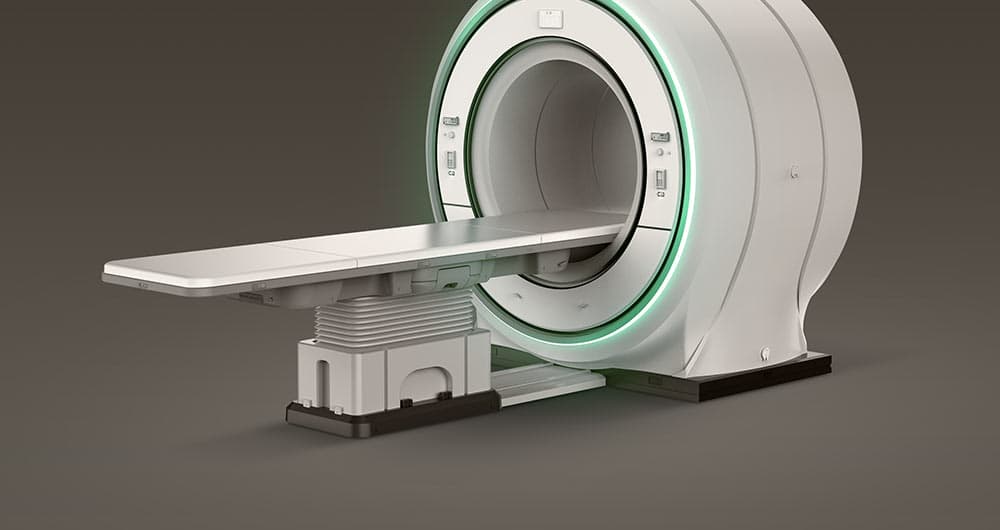
Image and context
An MRI sees structures. Laboratory values see function. Only together do they produce a statement.
Four providers by name
The categories above explain the market. Anyone searching in practice wants names. So here are four providers whose details can be checked on their own websites, with a note on what their offer covers and what it does not.
| Provider | What it is | Locations | Whole-body MRI | What that means for you |
|---|---|---|---|---|
| Conradia Radiologie Source: conradia.de | Radiology group with a dedicated prevention and screening unit | Munich, Hamburg, Dresden, Berlin (several sites per city) | Yes, as part of an internal-medicine-plus-radiology check-up | Quick route to the scan, radiologically strong. A full biomarker panel and functional diagnostics are not part of a radiology service catalogue. |
| Primenostics Source: primenostics.com | Private practice for radiology and nuclear medicine, Dr. Sven Walter | Berlin-Mitte, Berlin-Charlottenburg, Dresden, Leipzig, Hanover, Nuremberg, Munich | Yes, MRI is the core service | Seven locations, so rarely a long trip. Interpretation alongside blood work, functional tests and history does not happen in the same practice. |
| Prenuvo Source: prenuvo.com/locations | Provider specialising in whole-body MRI as a screening product | Clinics in London, Vancouver and New York among others, no German location | Yes, as a standalone product | For clients in German-speaking Europe that means travelling abroad, and the report stands without laboratory context. |
| YEARS | Physician-led preventive clinic, all diagnostics in one day | Berlin-Charlottenburg, clients from across Germany | Yes, from the Evolve program, with a proprietary sequence | The MRI sits alongside more than 120 biomarkers, functional diagnostics and liquid biopsy, all interpreted together in a physician-led consultation. Billed under GOÄ. |
Third-party details as published on the providers own websites, as of 24 August 2026. We deliberately do not quote third-party prices: they change constantly, and a comparison page with outdated prices helps nobody.
Eight questions before booking
The answers separate providers more clearly than any brochure.
Ask them of every provider, including us.
Is the MRI embedded or isolated?
An MRI shows structures, not function. Without laboratory work and functional diagnostics a large part of the picture stays blank, and an unremarkable scan can suggest a safety it does not cover.
Who discusses the findings, and for how long?
Ask specifically about the time allocated. Between a written report by email and an in-depth conversation with a specialist lies most of the actual value.
What happens with an incidental finding?
Whole-body MRIs frequently find things of no clinical significance. What matters is whether someone interprets that and coordinates the follow-up, or whether you are left alone with a finding, hunting for appointments.
Does laboratory work run on the same day?
Same day means comparable condition. If image and blood values come from different weeks, they can only be read together to a limited extent.
Is functional diagnostics performed?
The heart under load, lung function, capacity. Cardiac diagnostics run via echocardiography and ultrasound, not via MRI. Anyone who only scans does not see this part.
What field strength, which protocol?
Field strength and sequence protocol determine what becomes visible at all and how long you lie there. Also ask whether and when contrast agent is used.
One-off or with follow-up?
A single scan is a snapshot. Imaging becomes informative in comparison across years, and that requires a clinic that maintains the record.
GOÄ invoice and reimbursement?
A private medical invoice under GOÄ with itemised codes is the precondition for being able to submit at all. The commitment always comes from the insurer in the end.
Where YEARS sits
And when another provider is the better choice.
At YEARS the whole-body MRI runs on a 3-Tesla scanner with our own preventive protocol, radiation-free, contrast agent is not required, scan duration around 60 minutes. Laboratory diagnostics and more than 25 functional examinations run the same day, and a specialist discusses the overall findings. The MRI is included from the Evolve programme at €7,600.
When you are better off elsewhere: if you want to clarify one specific question and only need the image, a radiology centre is faster and considerably cheaper. If your budget does not stretch to a programme, a single scan beats no screening at all. And if you have a referral and statutory insurance covers it, there is no reason to pay privately.
We also say what a whole-body MRI generally cannot do: cardiac diagnostics run via echocardiography and ultrasound, not via MRI. For lung cancer screening it is not an established method. It does not replace colonoscopy. And an unremarkable scan is no guarantee.
Frequently asked questions on comparing providers
In Germany there are four types of provider. Radiology centres offer the scan as a self-pay service, but without laboratory work, without functional diagnostics and usually without an in-depth consultation. US providers such as Ezra and Prenuvo specialise in imaging but are based abroad. Private clinics with check-up departments book the MRI as a module within a multi-hour preventive programme. Longevity clinics treat the MRI as one component alongside laboratory work, functional diagnostics and follow-up. YEARS belongs to the last category: the whole-body MRI is part of a diagnostic day in Berlin from the Evolve programme upwards.
In Berlin there are essentially three groups beyond the regular practice. First, radiology centres offering preventive MRI as a standalone service. Second, private clinics and check-up departments of larger institutions with classic executive screening programmes. Third, physician-led preventive and longevity clinics where imaging, laboratory work and functional diagnostics come together in one day. YEARS belongs to the third group and is located in City West, around 15 minutes from the main station. Which group fits depends on whether you want an image or an interpretation.
For a specific clinical question a single scan can be exactly right, and then a radiology centre is the fastest and cheapest route. As prevention, the isolated scan has two weaknesses. First, an MRI shows structures but no organ function and no metabolic processes: an unremarkable scan says nothing about your lipids, your blood sugar or your capacity. Second, whole-body MRIs frequently find things of no clinical significance. Without medical interpretation that leads either to unnecessary worry or to a chain of further investigations that nobody coordinates.
The whole-body MRI runs on a high-resolution 3-Tesla scanner with our own preventive protocol, radiation-free, contrast agent is not required, and the scan takes around 60 minutes. What matters is the context: laboratory diagnostics and more than 25 functional examinations run the same day, including echocardiography, vascular and abdominal ultrasound, body plethysmography and spiroergometry. A specialist discusses the overall findings with you, and where findings are abnormal we coordinate referral. The MRI is included from Evolve.
Cardiac diagnostics with us are performed by echocardiography and ultrasound, not by MRI. For lung cancer screening the MRI is not an established method; low-dose CT is the tool of choice there for the appropriate risk profile. Nor does it replace bowel cancer screening, where colonoscopy remains the standard. And it is not a test that rules out cancer: an MRI can miss small findings, and an unremarkable scan is no guarantee. Anyone selling it differently is overstating the evidence.
An isolated preventive scan at a radiology centre is the cheapest option; prices differ considerably by provider and protocol. Embedded in a programme it is more expensive, because laboratory work, functional diagnostics and physician time are paid for too. At YEARS the whole-body MRI is included from the Evolve programme at €7,600, together with 120 laboratory markers and liquid biopsy. We bill according to GOÄ, so reimbursement is possible depending on your policy. German statutory health insurance generally does not cover preventive MRI.
Also relevant
Whole-body MRI screening
Process, protocol and limits
Why an MRI alone is not enough
Imaging in medical context
Cancer screening
MRI, biomarkers and liquid biopsy
Longevity clinics Germany
The market beyond imaging
Whole-body check-up
The MRI as one part of the complete check-up
Let us first establish whether you need an MRI at all.
A free intro call, 15 minutes. We say honestly whether a programme fits your situation, whether a single scan is enough, or whether neither is needed right now.
★ 4,9 · 71+ Google-reviews · PKV, Beihilfe & bKV reimbursable