


Prevention from 60
Health check-up from 60. For the years still ahead.
Radiation-free full-body MRI, heart rhythm including atrial fibrillation, cancer early detection, muscle strength and bone density, kidney function and your medication in context. Physician-led, everything in one day in Berlin, without alarm and without a conveyor belt.
- Radiation-free full-body MRI
- Heart rhythm & vessels
- Strength, bones, balance
- Intro call by phone
What matters from 60, and where the evidence ends
From 60 onwards the question shifts from predicting risk to measuring function: how much load the cardiovascular system carries, and how muscle strength, bone density, hearing and cognition stand. These are measurable and, unlike many risk markers, directly modifiable. Established cancer screening and the monitoring of existing diagnoses continue independently and belong in standard care. A check-up at YEARS brings the functional diagnostics together in a single day and has a physician interpret them. What it does not do is turn a finding in someone without symptoms into a prognosis. Where the evidence is thin, we say so.
What shifts from 60 on
At 60 it is no longer about a risk in thirty years.
The question is more concrete: how will you spend the next ten to twenty years? With strength, mobility and independence, or with limitations that would have announced themselves beforehand. Much of that is decided in the heart, vessels, muscles and bones, and all of it can be measured. We stay honest about it: early detection improves chances but guarantees nothing, and too much diagnostics can unsettle rather than help. That is why a physician places every finding in context for you.
Cancer is most often found now
Most cancer diagnoses fall in the years between 60 and 80. Many tumours grow silently for a long time, and organ-specific routine screening covers only part of the common types. Broader, structured early detection works best here when a physician puts it in context.
Heart rhythm enters the picture
Alongside blood pressure and vessel calcification, rhythm becomes a topic from 60 on. Atrial fibrillation rises markedly with age, frequently goes unnoticed and considerably increases stroke risk. An ECG finds it, and once treated it is well manageable.
Strength decides independence
Muscle mass and bone density keep declining, and strength fades faster than mass. That is precisely what later determines falls, fractures and how long you run your daily life without help. Both are measurable and respond to training.

Why YEARS from 60 on
One picture instead of four reports from four practices.
Heart and rhythm seen together
ECG, echocardiography, stress testing and vascular ultrasound in one run, complemented by ApoB and Lp(a). This shows pump function, valves, vessel walls and rhythm in context, instead of laying four reports from four practices side by side.
Radiation-free full-body MRI
High-resolution imaging looks in a structured way for early tumour indicators, aneurysms and organ changes, without X-ray radiation and usually without contrast agent. From 60 on an MRI also shows many harmless age-related findings. Every one is assessed by a physician so an incidental finding does not turn into needless worry.
Strength, bones and fall risk
Bone density, grip strength, balance and a 3D body scan show where fragility begins, long before the first fracture. The results become a concrete training and nutrition plan, because muscle and bone respond to loading at any age.
Kidney function and your medication
Creatinine, cystatin C and the filtration rate calculated from them determine the correct dose for several common medications. We go through your full medication list against your values and write it up so you can discuss it with the physicians treating you.
What we examine especially thoroughly from 60 on.
25+ functional examinations and 87 to 230 biomarkers, weighted towards the areas that decide independence and quality of life at this stage.
ECG, rhythm & atrial fibrillation
Resting ECG and stress testing capture rhythm disturbances that go unnoticed in daily life. Atrial fibrillation is the most important treatable stroke risk factor in this age group.
Radiation-free full-body MRI
Early tumour indicators, aneurysms and organ changes in one examination. Radiation-free, usually without contrast agent, with medical assessment of every incidental finding.
Cancer early detection via liquid biopsy
From Evolve, a blood sample broadly screens for tumour signals and complements organ-specific screening. A hint, not a verdict, always placed in medical context.
Bone density, grip strength & balance
Detect osteoporosis and sarcopenia early, before a fall makes the diagnosis. Grip strength and balance are robust indicators for the years ahead.
Kidney function & metabolism
Creatinine, cystatin C, HbA1c, uric acid and electrolytes. Kidney performance declines with age and sets the tolerable dose for many medications.
Cognitive baseline
Neurocognitive tests create a reference value for the years ahead. A baseline says nothing about a diagnosis, but it is what makes later changes recognisable at all.

Bones and strength
Bone density and muscle strength later decide how independent you stay.
Honestly
What we also have to tell you about prevention from 60 on.
The more you examine in this age group, the more you find. Part of it matters, a larger part is harmless. The difference is not made by the machine but by the conversation afterwards.
Not every finding is a disease
From 60 on, an MRI shows cysts, benign nodules or calcifications in almost everyone. For every finding we tell you clearly whether it carries meaning or is a normal finding for your age.
We also advise against
If an examination adds little information in your situation, we say so in the intro call before you book. A larger program is not automatically the better one.
Early detection is not a guarantee
It shifts probabilities in your favour and finds some things early enough to act on. It does not rule out something developing between two appointments. Anything else would be a promise nobody can keep.
How it works
You set the pace, we set the thoroughness.
Intro call by phone
Free and non-binding. You clarify your questions calmly, tell us about conditions and medication, and only then decide.
One day, physician-led
All examinations in one appointment in Berlin-Charlottenburg, with fixed breaks and a detailed medical conversation. Bring existing findings along.
Guidance year after year
Only the trend across several years shows what is really changing. Interim checks run by at-home blood draw if you prefer.
Internal medicine and geriatric medicine
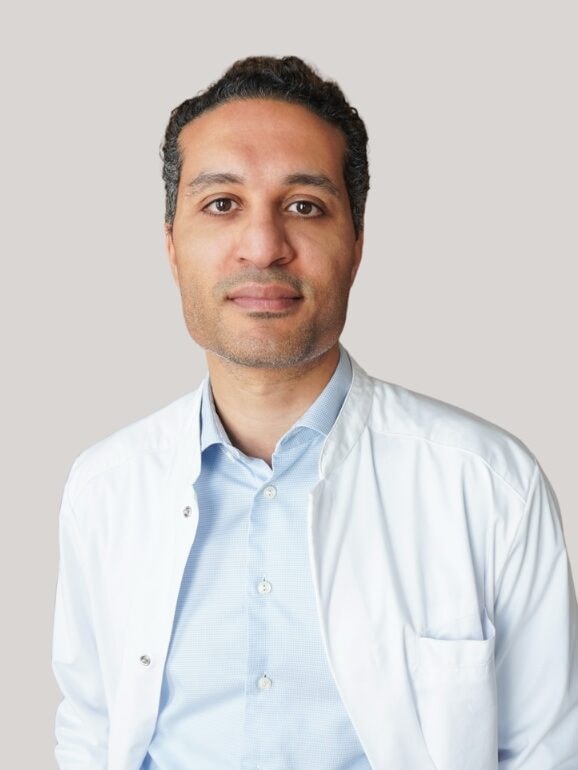
Dr. med. Hani Al-Mohamed
Former Deputy Chief Physician Internal Medicine | Geriatric Medicine | Corporate Health Manager (BGM)
„Health decides not only how long we live, but with how much energy, freedom and quality of life.“
View profileWhich program fits from 60 on?
Usually Evolve, with full-body MRI and liquid biopsy. Ultimate adds genetics, pharmacogenetics and microbiome, worthwhile with a family history of cancer or several long-term medications. Core is the calm entry point without MRI. We clarify what suits you on the phone first.
Choose the right checkup for you
All programs include comprehensive diagnostics and individual consultation
Core®
A medically guided baseline check that shows you where you stand and which topics need priority now.
For everyone who …
- want to truly know where they stand for the first time
- want to go beyond the five standard values at the GP
- want to start with prevention, without maximum depth right away
What you get
After one day you know where you are healthy and which two or three topics matter now.
Evolve®
Comprehensive diagnostics plus annual plan, follow-ups and adjustments — turning insight into lasting change.
For everyone who …
- want the full picture including whole-body MRI
- have a family history or first irregularities
- want to turn values into a guided annual plan
What you get
You get the full structural picture plus a plan that moves with you through the year.
Ultimate®
Personal health management with close medical guidance, Europe's most comprehensive diagnostics and continuous oversight.
For everyone who …
- want maximum diagnostic depth, down to epigenetics, neurology and microbiome
- want continuous medical guidance instead of a snapshot
- want to actively steer their healthy years, not just measure them
What you get
You have a team that steers your health year-round, instead of measuring it just once.
Common questions about the check-up from 60
In most cases yes, for a simple reason: from 60 on, the likelihood that something is actually there to find is considerably higher than at 40. Cardiovascular changes, atrial fibrillation, early-stage tumours and bone loss all become more common at this stage and often run for years without symptoms. At the same time the benefit has become more concrete. The question is less about a risk in thirty years and more about how you spend the next ten to twenty with strength, mobility and independence. We stay honest in both directions. Early detection improves chances, it guarantees nothing, and not every finding needs treatment. That is exactly why a physician places every result in the context of your situation.
Yes, and we say so openly. The older you are, the more harmless variations high-resolution imaging shows: cysts, benign nodules, calcifications, disc changes. Most of them mean nothing for your health. The problem is not the finding itself but what happens next when nobody puts it in context. Then come follow-up scans, uncertainty and sometimes procedures that would never have helped anyone. We work differently. Every finding is assessed by a physician and you get a clear statement on whether something needs following up, whether a check in a year is enough, or whether it is a normal finding for your age. If we think an examination is not worth it for you, we say that too.
Yes, and from 60 on this is one of the practically most useful parts of the day. Please bring a complete list of everything you take, including over-the-counter products and supplements. Much of it interacts, and part of the effect depends directly on values we measure. Kidney function via creatinine and cystatin C determines the correct dose for several common medications, potassium and sodium respond to blood pressure drugs and diuretics, and liver values respond to statins. In the medical conversation we go through what your values mean for your current medication. Changes themselves belong with the physicians treating you long-term. We provide the basis and write it up so you can take it with you and discuss it there.
The day is deliberately paced so it works without rush. Core takes about six hours, Evolve around nine and Ultimate around ten, all in one appointment in Berlin-Charlottenburg. There are fixed breaks between stations, breakfast after the blood draw and lunch are planned in, and there is no time pressure from station to station. If sitting or lying still for long is difficult, if your hearing is poor, if you use a walking aid or if you need more time for any other reason, tell us in the intro call. We then plan the sequence accordingly, build in longer breaks and explain every step beforehand. A companion can come along and stay in the waiting area. If you would rather split the day, raise that too and we will find a way.
From 60 on we recommend Evolve in most cases. It includes the radiation-free full-body MRI and the liquid biopsy for broad cancer early detection, on top of the complete cardiovascular work-up with ECG, echocardiography and vascular ultrasound. That covers precisely the areas that matter most statistically at this stage. Ultimate adds medical genetics, pharmacogenetics and microbiome analysis. That is mainly worthwhile with a family history of cancer or if you want to know how you metabolise medication. Core is the calm entry point with 87 biomarkers and the functional baseline examinations, without MRI. What suits you depends on your history, your existing findings and your questions. We clarify that in the free intro call before you commit.
Fully or partly, depending on how you are insured. Privately insured patients usually settle the check-up via the GOÄ schedule and are reimbursed a substantial share depending on their policy. Civil servants combine Beihilfe with a supplementary policy. If your employer provides company health insurance, that budget can often be used directly. Patients on statutory insurance generally pay themselves, because the check-up goes beyond the standard catalogue; in some constellations a bKV reimbursement applies. You receive a complete, GOÄ-compliant invoice with all individual items, which you can submit to your insurer. If you want to know in advance what to expect in your case, we clarify that in the intro call.

The first step is a calm conversation.
Book a free intro call or go straight to an appointment. We go through your history and your medication and tell you honestly what makes sense in your situation and what does not.
★ 4,9 · 71+ Google-reviews · PKV, Beihilfe & bKV reimbursable